
Data measured from 19 December 2025 to 7 March 2026
An outdoor swimming pool normally closes when the weather turns cold. Cover it with an air-supported dome and the pool can stay in use through autumn, winter and early spring. But how does the dome actually behave in a real winter? The monitoring data from one of our swimming-pool domes show it twice: through the cold months from 19 December 2025 to 27 February 2026, and hour by hour on 7 March 2026, a day with frost at night and sunshine in the afternoon.
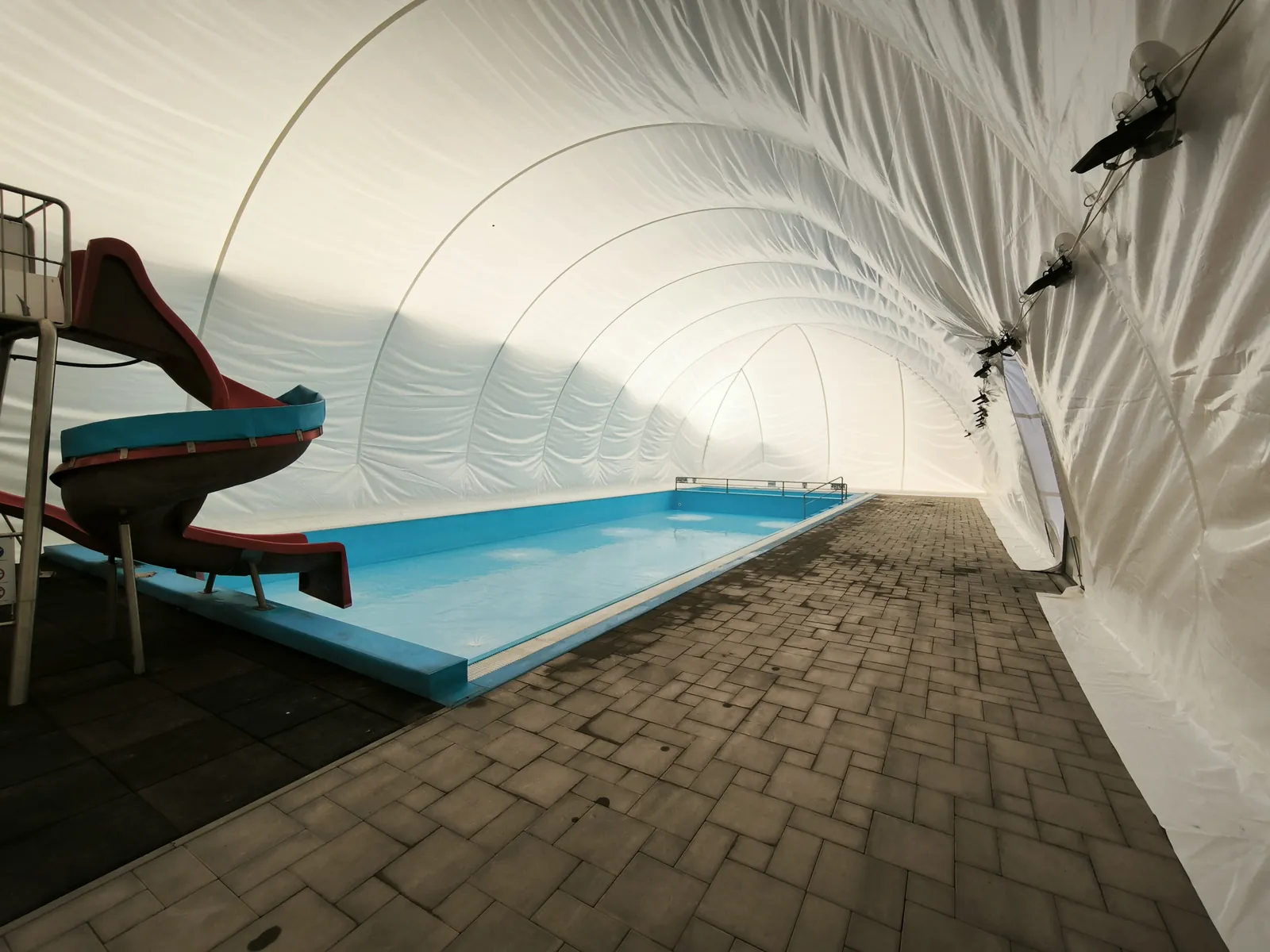
- Through mid-winter the dome was held at a 10 °C standby target. On the coldest night, at −17.0 °C outside, it was 9.4 °C inside.
- Over those 71 days 97% of pressure readings were within ±5 Pa of the 165 Pa target.
- On 7 March, at pool temperature, it was −0.9 °C outside at 06:00 and 21.5 °C inside the dome, a difference of more than 22 °C.
- Through the frosty night the indoor air held hourly averages of 21.4–21.6 °C, within 0.6 °C of the 22 °C target.
- From 09:26 to 16:58 the heater did not switch on once. The sun warming through the membrane kept the pool hall at 22–24.9 °C.
- Dome pressure averaged 165.1 Pa against a 165 Pa target and stayed within ±5 Pa for 95% of the day.
Why cover an outdoor pool with an air dome
An outdoor pool is a large investment that usually earns money for only three or four summer months. An air-supported dome turns it into an all-season facility: swimmers, schools and clubs can use it when the outdoor season is over, and the dome is inflated over the existing pool without building a permanent hall. The key questions for an operator are simple: will it stay warm inside, and will the structure stay stable? The data below answer both.
The membrane is delivered to site, spread out around the pool and anchored at the perimeter. Warm air is then blown in through ducts from the air-handling unit next to the dome. The same air flow heats the hall and holds the membrane up with a small overpressure.
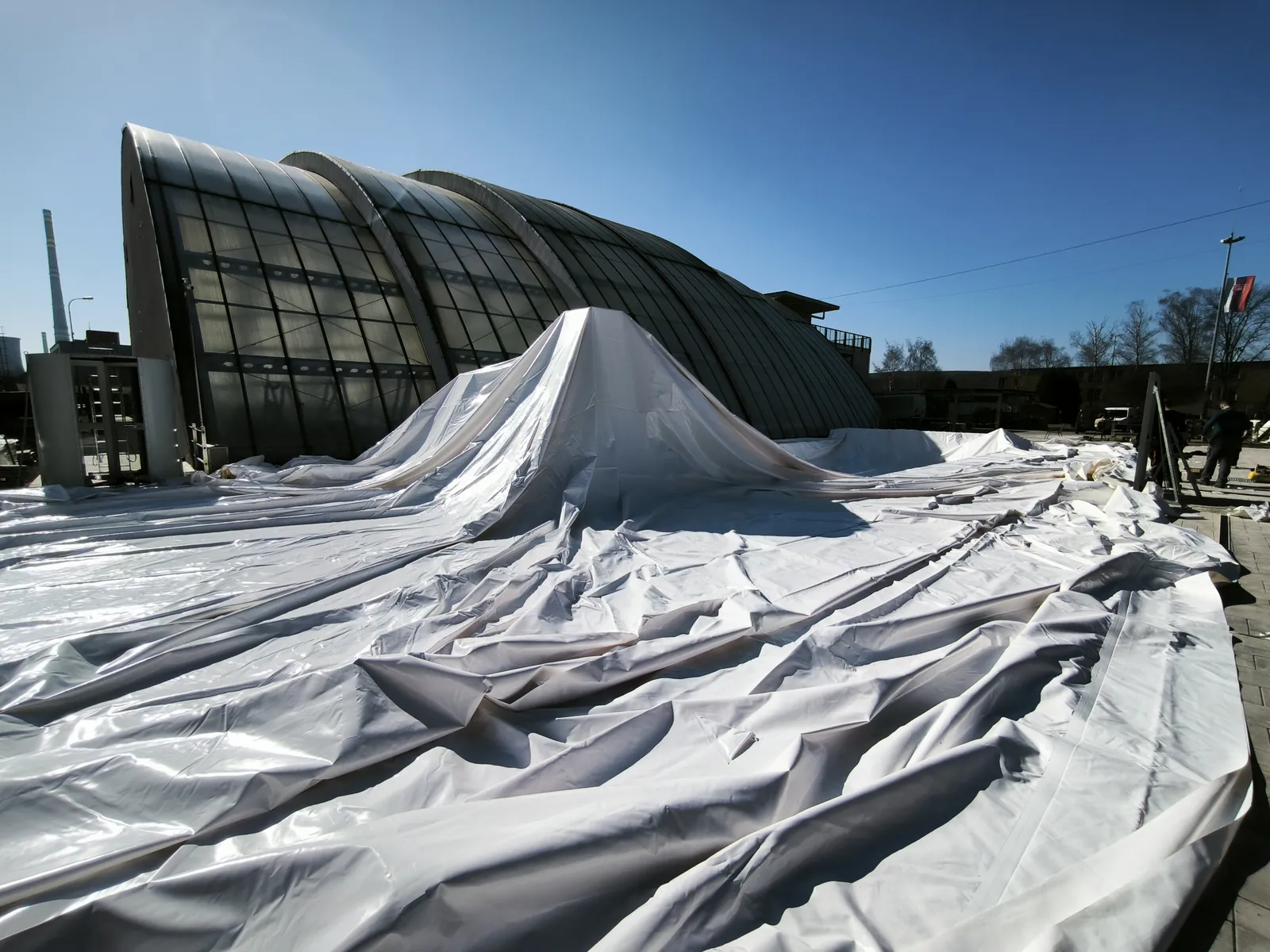
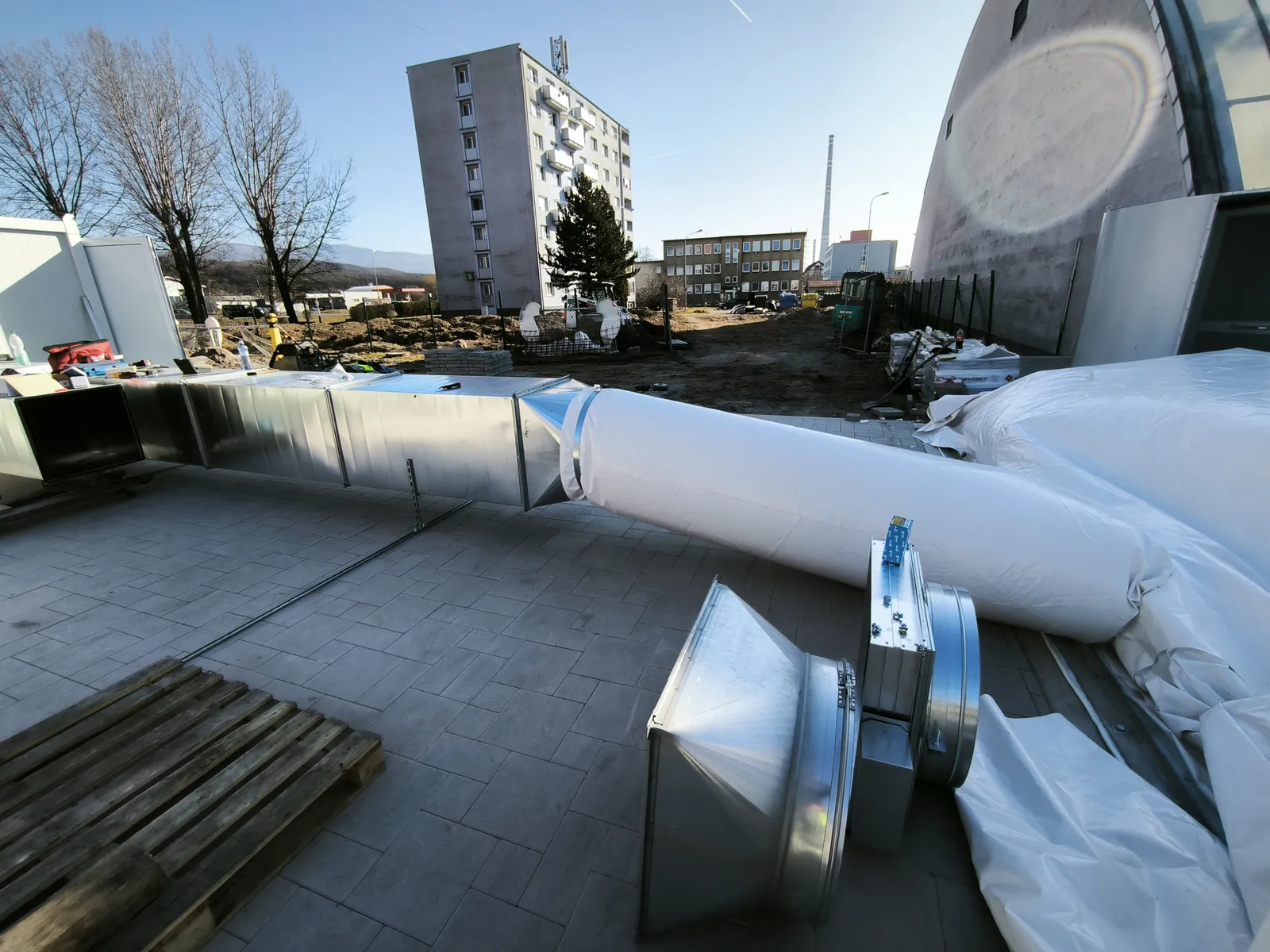
Mid-winter: 10 °C inside at −17 °C outside
This dome was not kept at swimming temperature all winter. From 19 December 2025 to 27 February 2026 the control system held it at a standby target of 10 °C, with a few short changes on single days. The dome stayed inflated over the pool the whole time. There was frost on 47 of these 71 days, and on 10 days the outdoor air fell to −10 °C or lower.
The coldest night came on 9 January 2026. At 05:18 the outdoor air reached −17.0 °C, and inside it was 9.4 °C. From 18:00 the evening before until 10:00 that morning the indoor air stayed between 8.8 and 10.6 °C, with the heater running 58% of the time. Over all 46 hours with −10 °C or colder outside, the median indoor temperature was 9.6 °C and the air was within 1 °C of the target 98% of the time.
The winter day by day
Lowest outdoor temperature of each day and the average indoor temperature of the same day, with the indoor target.
Orange: average indoor air of the day · Blue: lowest outdoor air of the day · Dashed: indoor target · Shaded: pool temperature from 28 February.
| Average outdoor temperature of the day | Days | Heater running per day |
|---|---|---|
| −5 °C or colder | 7 | 8.6 hours |
| −5 to 0 °C | 16 | 5.3 hours |
| 0 to 5 °C | 31 | 2.3 hours |
| above 5 °C | 14 | 0.6 hours |
Days with an average target of 9–11 °C, 68 of the 71 days. Running time is how long the heater was on, not how much energy it used.
The pressure held through the frost as well. Over the 71 days the median dome pressure was 165 Pa against a 165 Pa target, and 97% of all readings were within ±5 Pa. The lowest reading was 143 Pa, and on the coldest night the pressure averaged 165.2 Pa. The highest wind speed the dome's sensor recorded in this period was 29 km/h.
28 February: switch to pool temperature
On 28 February the operator raised the target to pool temperature, and the heater began to work much harder even though the weather was milder. In January, the coldest month, it ran about 5 hours a day at the 10 °C target. In March, with the dome at pool temperature, it ran about 12 hours a day. For this dome the target temperature mattered more for heating time than the frost did. How it compares with the sports domes we monitored through the same winter is in our study of air domes in winter: temperature and heating times.
7 March 2026: the day at a glance
The dome is 32 m long, 12 m wide and 6 m high. By then it had been at pool temperature for a week. The control system was set to 22 °C indoor air and 165 Pa dome pressure for the whole day. Outside, the night brought frost and the afternoon was sunny and mild.
| Measurement | Lowest – highest | Daily average | Target |
|---|---|---|---|
| Air inside the dome | 20.6–24.9 °C | 22.3 °C | 22 °C |
| Outdoor air | −1.2–19.1 °C | 7.2 °C | — |
| Supply air blown into the dome | 10.9–46.7 °C | 27.0 °C | — |
| Heater running | 0–73% of an hour | 8.4 hours in total | — |
| Dome pressure | 146–188 Pa | 165.1 Pa | 165 Pa |
Night: frost outside, 21.5 °C inside
Between midnight and 07:00 the outdoor temperature fell steadily and reached −0.9 °C at 06:00. The indoor air did not follow it: hourly averages stayed between 21.4 and 21.6 °C all night. To hold that, the air-handling unit blew in supply air at 32–34 °C, and the heater ran for roughly 55–73% of every hour.
Day: the sun takes over from the heater
After sunrise the outdoor temperature climbed to 18.2 °C by early afternoon. The control system reduced heating step by step and from 09:26 to 16:58 the heater was off. The heating water entering the air-handling unit dropped from about 70 °C at night to around 19 °C, and the supply air was cooler than the air inside the hall.
Even so, the indoor temperature rose to 24.9 °C. That heat came from the sun shining through the translucent membrane. For a pool hall this is a welcome effect: on a clear day the building partly heats itself, and the heater stays off for several hours. As the sun went down, the heater switched back on at 16:58 and brought the hall back to 21.6–22 °C for the evening.
Indoor and outdoor air, hour by hour
Hourly averages. The dashed line is the 22 °C indoor target; the shaded area marks the hours when the heater was off.
Orange: indoor air · Blue: outdoor air · Dashed: 22 °C target · Shaded: heater off.
How long the heater ran each hour
Share of each hour with the heater running. At night it cycled on and off about every 15 minutes; around midday it did not run at all.
Orange bars: heater running, % of the hour. In total the heater ran 8.4 hours out of 24.
Dome pressure: steady all day
An air dome stands because the air inside is kept at a slightly higher pressure than outside. The target was 165 Pa and the daily average was 165.1 Pa; for 95% of the day the pressure was within ±5 Pa of target.
The individual readings between 146 and 188 Pa are short swings that occurred when the heater switched on or off. The pressure control corrected each one within seconds: typically about 15 seconds, 90% of them within 40 seconds, and the longest took 69 seconds. Between 10:00 and 16:00, with the heater off, there was no swing larger than 10 Pa. Wind that day reached at most 18 km/h. More on how this works in our article on pressure regulation in air domes.
Dome pressure through the day
Hourly averages against the 165 Pa target. The scale runs from 163 to 167 Pa.
Blue: hourly average pressure · Dashed: 165 Pa target.
The full 24-hour breakdown
All values are hourly averages of the dome's monitoring data. Heating water is the temperature of the hot water entering the heating coil of the air-handling unit.
| Hour | Indoor air °C | Outdoor air °C | Supply air °C | Heater on % | Heating water °C | Pressure Pa |
|---|---|---|---|---|---|---|
| 00:00 | 21.5 | 1.3 | 32.1 | 55 | 66.7 | 164.9 |
| 01:00 | 21.5 | 0.8 | 33.0 | 62 | 67.8 | 165.1 |
| 02:00 | 21.5 | -0.1 | 32.9 | 62 | 67.9 | 165.1 |
| 03:00 | 21.5 | -0.4 | 33.2 | 57 | 68.4 | 165.1 |
| 04:00 | 21.4 | -0.6 | 34.1 | 73 | 67.9 | 164.8 |
| 05:00 | 21.4 | -0.7 | 34.2 | 65 | 69.1 | 164.9 |
| 06:00 | 21.5 | -0.9 | 33.6 | 62 | 70.5 | 165.6 |
| 07:00 | 21.6 | 0.6 | 31.3 | 57 | 65.0 | 164.9 |
| 08:00 | 22.0 | 4.3 | 24.3 | 30 | 56.7 | 165.3 |
| 09:00 | 22.2 | 8.4 | 19.1 | 12 | 44.9 | 165.3 |
| 10:00 | 22.4 | 12.2 | 16.1 | 0 | 22.1 | 165.0 |
| 11:00 | 23.7 | 15.1 | 18.4 | 0 | 19.1 | 165.0 |
| 12:00 | 24.6 | 17.8 | 20.1 | 0 | 19.4 | 165.0 |
| 13:00 | 24.8 | 18.1 | 20.6 | 0 | 19.9 | 165.0 |
| 14:00 | 24.6 | 18.2 | 20.5 | 0 | 19.9 | 164.9 |
| 15:00 | 23.9 | 17.0 | 19.2 | 0 | 19.1 | 165.1 |
| 16:00 | 22.5 | 15.7 | 18.0 | 3 | 18.4 | 164.8 |
| 17:00 | 22.0 | 13.8 | 25.6 | 27 | 52.5 | 165.0 |
| 18:00 | 21.9 | 9.9 | 27.2 | 32 | 58.3 | 165.8 |
| 19:00 | 21.8 | 6.7 | 29.3 | 42 | 62.5 | 164.6 |
| 20:00 | 21.7 | 5.1 | 30.1 | 47 | 63.6 | 164.9 |
| 21:00 | 21.6 | 4.2 | 30.9 | 52 | 66.9 | 165.7 |
| 22:00 | 21.6 | 3.0 | 31.5 | 52 | 66.9 | 165.0 |
| 23:00 | 21.6 | 2.3 | 32.0 | 55 | 67.7 | 165.5 |
What the data show
Through a real winter, and on one day that went from frost to spring sunshine, the pool dome did what an operator needs:
- Protected through the frost: held at a 10 °C standby target for 71 days, with 9.4 °C inside at −17.0 °C outside on the coldest night.
- Warm through the night: hourly averages of 21.4–21.6 °C inside with frost outside, more than 22 °C of difference.
- Heating only when needed: the heater ran 8.4 hours out of 24 and stayed off for 7.5 hours while the sun heated the hall.
- Stable structure: average pressure 165.1 Pa against a 165 Pa target, with every short swing corrected within 69 seconds at most.
How much heat a dome needs depends mainly on the membrane insulation, which we measured on five halls in air dome U-value and heating costs. For heating systems, see heating options for air domes; for humidity above warm pool water, see condensation in air domes. An overview of pool enclosures is on our swimming pool domes page.
Frequently asked questions
How warm is a swimming-pool air dome in winter?
As warm as the operator sets it. This dome was held at a 10 °C standby target from 19 December to 27 February, and on the coldest night, at −17.0 °C outside, it was 9.4 °C inside. At pool temperature on 7 March 2026 the indoor air held hourly averages of 21.4–21.6 °C through the night with −0.9 °C outside, against a 22 °C target.
Does a pool dome need heating on sunny days?
Often much less. On the monitored day the heater stayed off from 09:26 to 16:58. Sunshine through the translucent membrane raised the indoor air to 24.9 °C, and the heater ran 8.4 hours in total out of 24.
How stable is the pressure inside the dome?
The target was 165 Pa and the daily average was 165.1 Pa. For 95% of the day the pressure stayed within ±5 Pa of target. Short swings when the heater switched on or off were typically corrected in about 15 seconds and in 69 seconds at most.
Does a pool dome stay up in heavy frost?
Yes. Over 71 winter days, 47 of them with frost, the median dome pressure was 165 Pa against a 165 Pa target and 97% of readings were within ±5 Pa. On the coldest night, at −17.0 °C, it averaged 165.2 Pa.
How long does the heater run in winter?
It depends more on the target temperature than on the frost. At a 10 °C standby target the heater ran about 8.6 hours a day on days averaging −5 °C or colder and about 2.3 hours on days averaging 0 to 5 °C. At pool temperature in March it ran about 12 hours a day in milder weather. These are running times, not energy use.
How big is the monitored pool dome?
The dome is 32 m long, 12 m wide and 6 m high and covers an outdoor swimming pool.
Planning to keep your pool open this winter?
Send us the dimensions of your pool, the location and how you want to use it through the cold months. We will propose a dome size, heating and air-handling concept for your site.